
Fears With Bathing & Hygiene in Dementia Care
Module Purpose
Bathing and hygiene are essential parts of daily care — but for someone living with dementia, these tasks can become confusing, frightening, and emotionally overwhelming.
This module helps caregivers understand that resistance during bathing is not defiance or stubbornness, but a response to fear, sensory overload, or loss of control.
By learning how dementia affects perception, communication, and emotional safety, caregivers can adjust their approach to reduce distress, protect dignity, and keep both themselves and the person in their care safe.
This training focuses on:
Recognizing fear-based behaviors before they escalate
Understanding how caregiver actions and environments influence distress
Responding with patience, compassion, and flexibility
Maintaining safety without force or confrontation
The goal is not just to complete hygiene tasks — it is to provide care in a way that preserves trust, comfort, and dignity.
Section 1: Understanding Why Bathing & Hygiene Cause Fear in Dementia
Bathing and hygiene are some of the most personal activities a person experiences. For someone living with dementia, these tasks can quickly become overwhelming — not because they are unwilling, but because their brain no longer understands what is happening or why.
To a caregiver, bathing may feel routine and necessary.
To a person with dementia, it can feel sudden, confusing, and unsafe.
Understanding why fear happens during bathing is the first step in preventing distress.
Bathing Involves Multiple Losses at Once
Bathing requires a person to:
Undress
Be touched
Follow directions
Enter an unfamiliar or uncomfortable space
Give up control of their body
For someone with dementia, these experiences can trigger feelings of vulnerability, embarrassment, or danger — even if they cannot explain why.
The brain may no longer connect:
The caregiver with safety
The bath with cleanliness
The instructions with helpful intent
Instead, the brain focuses on self-protection.
Fear Is the Brain’s Attempt to Stay Safe
Dementia damages the brain’s ability to reason, but emotional responses remain strong. When the brain senses confusion or threat, it activates a fear response — even if no danger is actually present.
This fear response may show up as:
Refusal
Yelling
Crying
Pulling away
Freezing
Sudden aggression
These reactions are not deliberate.
They are the brain saying, “Something is wrong, and I don’t understand it.”
Why Logic and Explanation Often Fail
Caregivers often try to help by explaining:
“It’s time for your bath.”
“We do this every day.”
“I’m just trying to help you.”
Unfortunately, dementia affects the brain’s ability to:
Process multiple words
Understand cause and effect
Retain new information
So while the caregiver is explaining, the person’s fear may actually increase — not decrease.
Example Scenario
Mrs. Collins becomes upset when her caregiver brings her into the bathroom. As the caregiver begins explaining the bathing process step by step, Mrs. Collins starts shaking her head and saying “No.”
The caregiver believes Mrs. Collins is being stubborn or resistant.
In reality, Mrs. Collins’ brain is overwhelmed. She doesn’t understand why she is being undressed, where she is being taken, or what will happen next. Her fear increases because she feels powerless and confused.
The fear comes before the behavior.
What Fear Can Look Like (Even When It’s Quiet)
Not all fear is loud or aggressive. Sometimes it shows up subtly.
Early signs of bathing-related fear may include:
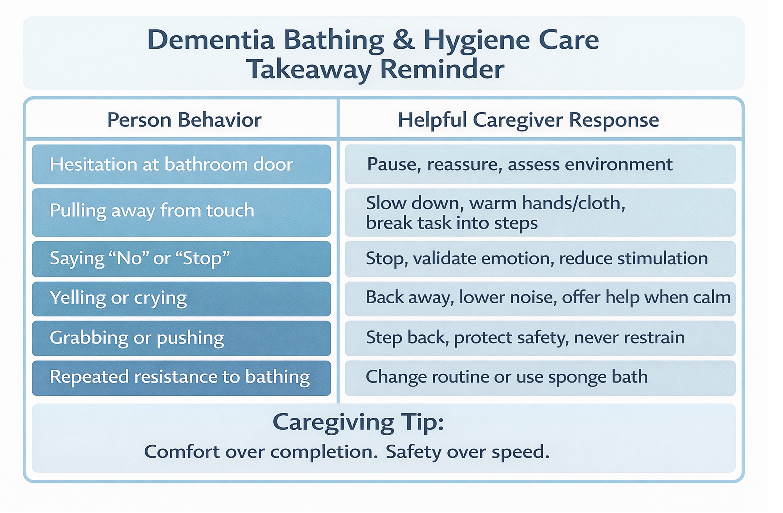
Hesitation at the bathroom doorway
Looking around the room repeatedly
Holding onto clothing
Avoiding eye contact
Becoming unusually quiet
These moments are important signals. When caregivers notice them early, they can slow down and prevent escalation.
Why This Understanding Matters
When caregivers view bathing resistance as fear rather than defiance, their entire approach changes.
Instead of asking:
“How do I make them cooperate?”
They begin asking:
“What feels unsafe right now?”
“What can I change to reduce fear?”
This shift protects:
The person’s dignity
The caregiver’s safety
The relationship of trust
Caregiver Reflection
Think about a time when someone resisted bathing or hygiene care.
Ask yourself:
What might they have been feeling in that moment?
Did anything change right before the fear appeared?
Was there confusion, exposure, or loss of control involved?
Understanding fear doesn’t excuse unsafe behavior — but it explains it. And explanation is the foundation of compassionate, effective dementia care.
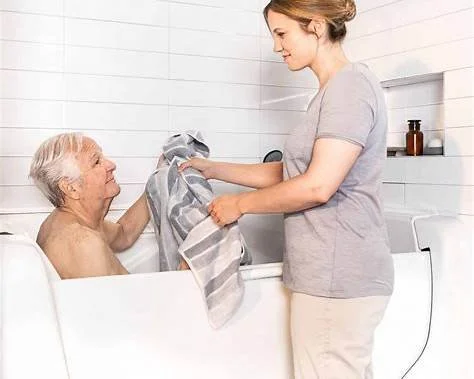
Section 2: How Dementia Changes Sensory Perception During Bathing & Hygiene
For someone living with dementia, bathing is not experienced the way it is for someone with a healthy brain. The senses — sight, sound, touch, and temperature — are often processed differently. What feels ordinary to a caregiver may feel intense, painful, or frightening to the person receiving care.
Understanding these sensory changes helps caregivers recognize that fear during bathing is often sensory-based, not emotional or behavioral.
The Brain No Longer Filters Sensory Input
A healthy brain automatically filters out unnecessary sensory information. Dementia damages this filtering system.
As a result, the person may experience:
Sounds as louder than they are
Touch as rough or painful
Temperature changes as extreme
Visual details as confusing or threatening
During bathing, many of these sensations happen at the same time, which can overwhelm the brain quickly.
How Sound Can Trigger Fear
Bathrooms are full of unfamiliar and sudden sounds:
Running water
Echoing voices
Fans or vents
Dripping faucets
To a person with dementia, these sounds may feel startling or even threatening.
Example Scenario
Mr. Alvarez becomes visibly distressed the moment the shower is turned on. He covers his ears and begins yelling.
The caregiver assumes he is afraid of water. In reality, the loud rush of water sounds sudden and overwhelming to his brain. When the caregiver turns the water on before bringing Mr. Alvarez into the bathroom and keeps her voice soft, his distress decreases.
👉 The fear was triggered by sound, not the bath itself.
How Touch Can Feel Painful Instead of Comforting
Dementia can change how the brain interprets touch. Even gentle contact may feel:
Too firm
Unexpected
Painful
Invasive
This is especially true for:
Fragile or aging skin
Cold washcloths
Rough towels
Sudden movements
Example Scenario
Ms. Greene pulls her arm away sharply when the caregiver begins washing her. The caregiver thinks she is refusing care.
In reality, the cold washcloth against her skin felt shocking. When the caregiver warms the cloth and moves more slowly, Ms. Greene relaxes.
Temperature Feels More Extreme
People with dementia may have difficulty regulating body temperature or communicating discomfort.
They may feel:
Very cold when undressed
Overheated under bright lights or warm water
Uncomfortable with air movement from vents or fans
Example Scenario
Mr. Jenkins repeatedly tries to leave the bathroom during bathing. The caregiver later realizes the room feels cold once his clothes are removed. After warming the room and using towels to keep him covered, he remains calm.
Visual Changes Can Create Confusion or Fear
Dementia affects depth perception and visual processing.
Common visual triggers include:
Shiny or wet-looking floors
Dark drains that appear like holes
Mirrors showing an unfamiliar reflection
Bright lighting or shadows
White towels blending into white floors or walls
Example Scenario
Ms. Turner refuses to step into the shower and freezes at the doorway. The caregiver notices she is staring at the shiny tile floor. To Ms. Turner, the surface looks slippery or flooded. Placing a dark towel or bath mat on the floor helps her step forward safely.
Why Sensory Overload Leads to Resistance
When multiple uncomfortable sensations happen at once, the brain moves into self-protection mode. The person may:
Pull away
Yell
Freeze
Push hands away
Attempt to escape
These reactions are not choices — they are the body responding to overload.
The person may not be able to explain what feels wrong, but their behavior communicates clearly that something does not feel safe.
Why This Understanding Matters
When caregivers recognize sensory overload as the source of fear, they can adjust the environment instead of trying to change the person.
Small changes — softer lighting, warmer towels, quieter water — can dramatically reduce distress.
The goal is not to remove every sensation, but to reduce intensity and unpredictability.
Caregiver Reflection
Think about a time when someone became upset during bathing or hygiene care.
Ask yourself:
What sounds were present?
What did the water or cloth feel like?
Was the room warm or cold?
Were there visual distractions or glare?
Often, fear decreases when even one sensory trigger is addressed.
Section 3: Recognizing Early Warning Signs of Bathing-Related Fear
Fear during bathing rarely appears without warning. Most of the time, the person’s body and behavior begin signaling distress before resistance, yelling, or aggression occurs.
Learning to recognize these early warning signs allows caregivers to slow down, adjust their approach, and prevent escalation — protecting both the person and themselves.
Fear Often Appears Before Words
Many people with dementia lose the ability to clearly explain what feels wrong. Instead, their body communicates for them.
These signals are easy to miss if caregivers are focused only on completing the task.
Early signs of fear may look subtle, but they are meaningful.
Early, Quiet Warning Signs
These behaviors often appear before refusal or agitation:
Pausing or slowing down suddenly
Hesitating at the bathroom doorway
Looking around the room repeatedly
Becoming unusually quiet
Avoiding eye contact
Holding onto clothing or furniture
Stiffening shoulders or arms
These signs suggest the person is becoming unsure, overwhelmed, or fearful.
Example Scenario
Ms. Brooks stops walking as she approaches the bathroom and grips the hallway railing. She doesn’t say anything — she just stands still.
The caregiver initially thinks she is being uncooperative. In reality, Ms. Brooks is processing fear and confusion. When the caregiver pauses, speaks softly, and reassures her, Ms. Brooks is able to continue.
Physical Signs of Increasing Fear
As fear grows, the body reacts more strongly.
Physical indicators may include:
Muscle tension
Clenched fists
Shallow or rapid breathing
Trembling
Pulling away from touch
Turning the body away
These signs indicate the nervous system is moving into fight-or-flight mode.
Verbal Signs of Distress
When words are used, they are often emotional rather than logical.
Common phrases include:
“No!”
“Stop!”
“Don’t!”
“Leave me alone”
“I already did that”
“You’re hurting me”
These statements reflect fear, not understanding.
Example Scenario
Mr. Lee repeatedly says “Stop” while his caregiver tries to help him undress. The caregiver realizes this is not refusal — it is a request for safety. She pauses, gives him space, and explains slowly what she is doing before continuing.
When Early Signs Are Missed
If fear signals are ignored, the person may feel trapped.
This can lead to:
Yelling
Crying
Pushing or grabbing
Attempting to leave
Sudden aggression
At this stage, the behavior may seem unpredictable, but it has usually been building for several minutes.
Why Early Recognition Matters
Catching fear early:
Prevents escalation
Reduces injury risk
Preserves trust
Makes bathing more successful
Creates a calmer experience for everyone
Once fear reaches a high level, the brain can no longer process reassurance or instructions. Early intervention is key.
Caregiver Insight
Fear-based behaviors are not personal attacks.
They are protective responses from a confused brain.
When caregivers respond to early signs instead of waiting for crisis behavior, they change the entire outcome of the interaction.
Caregiver Reflection
Think about a recent bathing or hygiene situation.
Ask yourself:
Did I notice hesitation or silence?
Were there physical signs of tension?
Did I continue the task or pause to adjust?
Learning to recognize early warning signs takes practice — but each moment of awareness builds your skill and confidence as a caregiver.
<!DOCTYPE html>
<html>
<style>
table, th, td {
  border:1px solid black;
}
</style>
<body>


<table style="width:100%">
  <tr>
    <th>Cause</th>
    <th>Effect on Mobility</th>
  </tr>
  <tr>
    <td>Brain can't judge distance</td>
    <td>Person refuses to step into bathroom or hall</td>
    </tr>
  <tr>
    <td>Vision misinterprets shadows</td>
    <td>Person thinks hallway is unsafe, freezes</td>
    </tr>
  <tr>
    <td>Body awareness reduced</td>
    <td>Person sits too early and misses chair</td>
     </tr>
  <tr>
    <td>Fear triggered by fast caregiver movements</td>
    <td>Person grabs arms or pushes backward</td>
  </tr>
  <tr>
    <td>Instructions given too quickly</td>
    <td>Person becomes confused and stops walking</td>
    </tr>
  <tr>
    <td>Past fall memory resurfaces</td>
    <td>Person panics even if movement is safe</td>
     </tr>
  <tr>
    <td>Pain in knee/hip/back</td>
    <td>Sudden refusal to stand or walk</td>
  </tr>
</table>


</body>
</html>
| Cause | Effect on Mobility |
|---|---|
| Brain can't judge distance | Person refuses to step into bathroom or hall |
| Vision misinterprets shadows | Person thinks hallway is unsafe, freezes |
| Body awareness reduced | Person sits too early and misses chair |
| Fear triggered by fast caregiver movements | Person grabs arms or pushes backward |
| Instructions given too quickly | Person becomes confused and stops walking |
| Past fall memory resurfaces | Person panics even if movement is safe |
| Pain in knee/hip/back | Sudden refusal to stand or walk |
Section 4: Caregiver Actions That Can Increase Fear (Without Realizing It)
Most caregivers want to help. When someone resists bathing or hygiene care, it’s natural to try harder, move faster, or explain more.
Unfortunately, these well-meaning actions can increase fear instead of reducing it.
For a person with dementia, how care is delivered often matters more than what care is being given.
Speed and Control Can Feel Like a Threat
Dementia affects how quickly the brain can process information. When caregivers move fast or take control without warning, the brain may interpret the situation as unsafe.
Common actions that increase fear include:
Moving too quickly
Giving multiple instructions at once
Raising the voice to be heard
Touching without warning
Undressing the person too fast
Standing too close or blocking exits
To the caregiver, these actions feel efficient.
To the person with dementia, they feel overwhelming.
Why “Helping” Can Feel Like Losing Control
Bathing already involves vulnerability. When a caregiver takes over the process too quickly, the person may feel trapped or powerless.
The brain reacts by trying to regain control through resistance.
Example Scenario
Mr. Williams becomes tense when his caregiver begins removing his shirt. Wanting to help, the caregiver moves faster and says, “It’s okay, I’ve got you.”
Mr. Williams pulls away and raises his voice.
The caregiver sees resistance.
Mr. Williams feels rushed and unsafe.
The fear increases because his body is reacting before his brain can understand what’s happening.
Why This Understanding Matters
When caregivers slow down and reduce control, fear often decreases on its own.
Instead of asking:
“How do I finish this task?”
Caregivers can ask:
“How can I make this feel safer?”
Caregiver Reflection
Think about a time bathing became difficult.
Ask yourself:
Was I moving faster than the person could process?
Was I giving too many instructions at once?
Did I touch or undress without warning?
Small changes in pace can create big changes in comfort.
Section 5: Preparing the Environment to Reduce Fear
Sometimes fear during bathing isn’t caused by the task — it’s caused by the surroundings.
Dementia changes how the brain responds to noise, light, temperature, and visual details. A bathroom that feels normal to a caregiver may feel chaotic or unsafe to someone with dementia.
Environmental Triggers That Increase Distress
Common triggers include:
Bright or flickering lights
Echoing or running water
Cold air when clothing is removed
Strong smells from cleaning products
Shiny floors that look wet or slippery
Lack of privacy
When these triggers are present, fear can appear suddenly.
Example Scenario
Ms. Lewis becomes anxious every time she enters the bathroom. She looks around and begins to shake her head “no.”
The caregiver notices the bright overhead light and loud fan. After switching to softer lighting and turning the fan off, Ms. Lewis enters the bathroom calmly.
The task didn’t change — the environment did.
Why This Understanding Matters
The brain with dementia relies heavily on environmental cues to judge safety.
A calm, predictable space helps the brain relax before care even begins.
Caregiver Reflection
Before bathing, ask yourself:
Is the room warm?
Is the lighting soft?
Is the space quiet and private?
Often, fear decreases when the environment feels safe.
Section 6: Communication That Reduces Fear During Hygiene Care
People with dementia may not fully understand words, but they always understand tone, body language, and emotional energy.
What caregivers say — and how they say it — can either calm or escalate fear.
Why Fewer Words Often Work Better
Dementia affects the brain’s ability to process language. Long explanations or repeated instructions can increase confusion.
Helpful communication includes:
Short, simple phrases
Calm, steady tone
Slow pace
Reassurance without arguing
Example Scenario
Instead of saying, “You need to take a bath now because it’s been a few days,” the caregiver says, “Let’s get you comfortable.”
The shorter phrase reduces pressure and feels less threatening.
Why This Understanding Matters
When caregivers focus on emotional reassurance instead of logic, the person feels safer — even if they don’t fully understand the task.
Caregiver Reflection
Think about your words during bathing.
Ask yourself:
Am I explaining too much?
Is my tone calm or rushed?
Would fewer words help right now?
Sometimes presence speaks louder than instructions.
HOW TO RECOGNIZE FEAR OF FALLING INSTANTLY
Common signs include:
A sudden halt or freeze
Widened eyes
Shallow breathing
Repetition of “Wait, wait!”
Reaching for walls/furniture
Leaning backward
Grabbing caregiver tightly
Whimpering or crying
Shaking knees
Saying “Don’t let me fall!”
Refusing to move
Remember:
Fear is not defiance. Fear is protection.
Scenarios: These are teachable stories
⭐ Scenario 1: The Transfer Panic
Mrs. C needs to stand from her recliner.
When the caregiver begins the transfer too quickly, Mrs. C screams, “STOP!”
What’s happening internally:
Her brain lost track of where her body is.
Standing felt like falling.
Correct caregiver approach:
The caregiver pauses and kneels to her eye level:
“We’re not rushing. You’re safe. Let’s breathe together.”
Then:
“First we wiggle forward… good. Now lean your chest toward me.”
Outcome:
Her fear decreases.
She stands successfully — not because she got stronger, but because she felt safe.
⭐ Scenario 2: The Bathroom Threshold Freeze
Mr. L stops at the bathroom door and refuses to enter.
Cause:
Bathroom tile is shiny — his brain sees it as slippery or wet.
Incorrect response:
“Come on, it’s not slippery.”
Correct response:
Step onto the bathroom tile yourself and say:
“Look, it’s safe. I’ll go first and hold your hand.”
You demonstrate slowly — giving his brain confidence.
Outcome:
He follows safely.
⭐ Scenario 3: The Sudden Backward Lean
Mrs. U leans backward every time someone tries to help her stand.
Cause:
Her brain senses she is falling forward, even when she isn’t.
Correct caregiver approach:
Place one hand on her upper back (not pulling — just reassuring),
and say:
“I’ve got your back. Lean forward with me… nose over toes.”
Outcome:
She shifts weight safely because the fear center in her brain feels supported.
⭐ Scenario 4: The Walker Panic
When walking, Mr. S keeps saying, “I’m slipping! I’m slipping!” even though the floor is clean and dry.
Cause:
His brain misreads floor texture OR he feels dizzy from medications.
Correct caregiver approach:
Slow the pace.
Place your hand near his elbow (not gripping).
Say:
“You’re steady. I’m right beside you. Let’s take slow steps.”
Outcome:
His panic decreases and walking becomes smoother.
HOW TO RESPOND TO FEAR OF FALLING
✔ Slow everything down
Fear drops as speed decreases.
✔ Validate the fear
Invalidating fear increases panic.
Say:
“I know this feels scary.”
“I’m right here.”
“We’ll do this together.”
✔ Use one clear step at a time
The brain needs simple, predictable direction.
✔ Approach from the front
Unexpected touch increases fear.
✔ Create stability with your posture
Your body must look balanced and calm.
✔ Let the person hold YOU (not the other way around)
It increases their sense of control.
Fall Mitigation: Creating a Safe, Predictable Environment
Why Falls Happen in Dementia
Falls are rarely caused by weakness alone.
They happen because the environment becomes confusing to the brain.
A person with dementia may misinterpret:
Shadows
Patterns
Carpets
Steps
Reflections
Furniture positioning
This creates huge fear spikes and hesitation during movement.
Environmental Triggers That Increase Fall Risk
1. Poor Lighting
Dim areas create shadows that look dangerous.
2. Sudden Light Changes
Bright → dim = disorientation
Dim → bright = overwhelm
3. Floor Pattern Changes
Dark → light flooring looks like a step.
4. Clutter
Shoes, papers, cords, pet toys all become hazards.
5. Loose Rugs
Even a tiny corner lifted ¼ inch can cause trips.
6. Noise
Sudden noise causes the person to stop or turn suddenly.
7. Furniture Rearrangement
The brain relies heavily on routine; changes cause confusion.
Section 7: Responding to Fear During the Bath
Even with preparation, fear may still appear once bathing begins.
The goal is not to push through fear — it is to respond to it.
Signs Fear Is Increasing
You may notice:
Tensing muscles
Pulling away
Holding breath
Tears or pleading
Sudden stillness
These signs mean the nervous system is overwhelmed.
Example Scenario
Ms. Harper begins crying when water touches her shoulders. Instead of continuing, the caregiver pauses, lowers the water, and reassures her.
After a moment of calm, Ms. Harper allows care to continue.
Stopping prevented escalation.
Why This Understanding Matters
When fear is addressed immediately, trust is preserved. When fear is ignored, the brain learns that bathing is unsafe.
Caregiver Reflection
During bathing, ask yourself:
What is their body telling me right now?
Should I pause instead of pushing forward?
Pausing is a powerful caregiving skill.
Section 8: When a Full Bath Is Not Possible
Some days, bathing is simply too overwhelming — and that does not mean care has failed.
Hygiene can be flexible.
Safe Alternatives to Full Bathing
Acceptable options include:
Sponge bathing
No-rinse wipes
Cleaning one body area at a time
Dry shampoo
Changing clothing instead of bathing
Example Scenario
Mr. Nguyen refuses a shower but allows his caregiver to clean his face and hands. The caregiver plans to complete the rest later.
Trust is maintained, not broken.
Why This Understanding Matters
Forcing care can create long-term fear. Flexible care builds cooperation over time.
Caregiver Reflection
Ask yourself:
Is full bathing necessary right now?
What level of hygiene feels safe today?
Meeting the person where they are matters more than completing a checklist.
Section 9: Trauma-Informed Bathing Care
Some individuals have past experiences that make bathing especially distressing, even if the caregiver is gentle.
The brain may react without conscious memory of why.
Possible Triggers
Past abuse
Medical trauma
Cultural or modesty concerns
Loss of privacy
These triggers may appear suddenly and intensely.
Example Scenario
Ms. Johnson becomes panicked when her clothing is removed. The caregiver stops, covers her with a towel, and adjusts the approach to partial care.
The caregiver does not need to know the trauma to respect it.
Why This Understanding Matters
Respecting boundaries protects dignity and prevents re-traumatization.
Caregiver Reflection
Ask yourself:
Am I prioritizing safety and dignity over completion?
Have I allowed the person control when possible?
Consent matters, even when communication is limited.
Section 10: Caregiver Safety During Bathing & Hygiene
Bathing and hygiene care place caregivers in close physical proximity to someone who may be frightened, confused, or overwhelmed. When fear increases, the body may react suddenly — even if the person has never been aggressive before.
Caregiver safety is not secondary to care.
It is essential to providing calm, effective, and compassionate support.
Understanding how and why safety risks occur allows caregivers to prevent injury rather than react to it.
Why Bathing Is a High-Risk Activity for Caregivers
Bathing combines several risk factors at once:
Close physical contact
Slippery surfaces
Limited space
The person being undressed or exposed
Increased fear or sensory overload
When fear activates the brain’s survival response, movements may become sudden and unpredictable.
These reactions are not intentional — they are reflexive.
How Fear Can Lead to Unsafe Movements
When someone with dementia feels threatened, their body may attempt to protect itself by:
Grabbing arms or clothing
Pushing hands away forcefully
Pulling suddenly to escape
Swinging or striking without warning
Dropping their weight or collapsing
These movements can happen quickly and without verbal warning.
Example Scenario
Mr. Carter has always been gentle during care. One morning, while being bathed, he suddenly grabs the caregiver’s wrist and pulls hard.
The caregiver is shocked — this has never happened before.
Mr. Carter is not trying to hurt anyone. His brain is overwhelmed by cold air and running water, and his body reacts before he can process what is happening.
Why Restraining or Forcing Care Makes It Worse
In moments of fear, caregivers may feel tempted to hold on, restrain, or “push through” the task to finish.
This often escalates the situation.
Restraint can:
Increase panic
Trigger stronger fight-or-flight reactions
Cause injury to both the caregiver and the person
Damage trust long-term
Force teaches the brain that bathing is dangerous.
Safe Caregiver Positioning Matters
How a caregiver stands and moves during bathing affects safety.
Safer practices include:
Standing to the side rather than directly in front
Keeping exits accessible
Watching hands and arms closely
Avoiding bending directly over the person
Maintaining space when agitation increases
These positions allow caregivers to step back quickly if needed.
Example Scenario
As Ms. Bennett becomes tense, the caregiver notices her fists clenching. Instead of continuing, the caregiver steps slightly back and lowers stimulation.
Ms. Bennett relaxes, and care continues safely.
Early awareness prevented escalation.
Knowing When to Step Away
One of the most important safety skills is recognizing when to stop.
Signs that it’s time to pause or step away include:
Rapid breathing
Raised voice or repeated “no”
Grabbing or pushing
Wide or fearful eyes
Sudden freezing or pulling back
Stepping away is not giving up — it is protecting everyone involved.
Example Scenario
When Mr. Lopez begins yelling and pushing hands away, the caregiver stops the task and leaves the bathroom for a few minutes.
When she returns, his breathing has slowed and care resumes calmly.
Space restored safety.
Why Asking for Help Is a Strength
Some situations require additional support.
Caregivers should ask for help when:
The person’s fear escalates repeatedly
Physical strength is mismatched
Past injury has occurred
Care feels unsafe
Using support protects both caregiver and client.
Why This Understanding Matters
Caregiver safety and client safety are connected.
When caregivers feel secure:
They move more calmly
They communicate more gently
They make better decisions
Safety creates stability — and stability reduces fear.
Caregiver Reflection
Think about a moment when bathing felt unsafe.
Ask yourself:
Did I notice early warning signs?
Did I feel pressure to finish the task?
Could pausing or stepping back have helped?
Your instincts matter. Trust them.
Key Safety Reminders
Never restrain
Never argue during fear
Never continue if safety is at risk
Always prioritize calm over completion
Final Thought
You cannot care for someone else if you are injured or afraid.
Protecting your safety protects your ability to care with patience, compassion, and confidence.
Final Reflection: Safety and Comfort Come First
Bathing and hygiene care for a person living with dementia are not just physical tasks — they are emotional experiences that can either build trust or create fear.
When safety and comfort are prioritized, bathing becomes a moment of care rather than conflict.
Fear during bathing is not a failure of the person or the caregiver. It is the brain’s response to confusion, vulnerability, and sensory overload. When caregivers recognize this, they can respond with patience instead of pressure.
Safety matters because fear can lead to sudden movements, injuries, and long-term distress. Comfort matters because a calm nervous system allows the person to feel secure, respected, and willing to accept care — now and in the future.
Caregivers do not need to rush, force, or finish every task in one moment.
They need to:
Slow down
Watch for early signs of fear
Adjust the environment
Communicate with reassurance
Pause when safety is at risk
When caregivers feel safe, they move calmly.
When the person feels safe, fear decreases.
These two forms of safety work together.
The most successful bathing experiences are not measured by how much was completed, but by how the person felt when it was over.
Caregiver Reflection
Take a moment to think about your role in bathing and hygiene care.
Ask yourself:
Did I prioritize safety over speed?
Did I focus on comfort as much as cleanliness?
Did I pause when fear appeared?
Did I protect both the person and myself?
Every calm interaction builds trust.
Every safe decision strengthens your ability to provide compassionate care.
In dementia care, safety and comfort are not extras — they are the foundation of everything else.

<p>Hello, World!</p>
<p>Hello, World!</p>
| Column 1 | Column 2 | Column 3 |
|---|---|---|
| Row 1, Col 1 | Row 1, Col 2 | Row 1, Col 3 |
| Row 2, Col 1 | Row 2, Col 2 | Row 2, Col 3 |
Hello, World!
| Column 1 | Column 2 | Column 3 |
|---|---|---|
| Row 1, Col 1 | Row 1, Col 2 | Row 1, Col 3 |
| Row 2, Col 1 | Row 2, Col 2 | Row 2, Col 3 |